
'Indices will remain range bound in 2022 as earnings catch up with the current multiples.'

E-commerce platform Snapdeal has filed preliminary documents with markets regulator Sebi to raise funds through an initial public offer (IPO), joining the league of internet-led businesses looking to list on domestic stock exchanges. The public issue comprises fresh issuance of equity shares worth Rs 1,250 crore and an offer for sale (OFS) of 3.07 crore equity shares, according to the draft red herring prospectus (DRHP). According to market sources, potential listing could value Snapdeal at about $1.5-1.7 billion.

After a month long gap, the primary market is heading for a busy time, with five firms including Paytm parent One97 Communications and policybazaar parent PB Fintech have lined up their IPOs in the first half of November to raise over Rs 27,000 crore collectively. The other three firms whose initial share-sales are set to open are Sapphire Foods India, which operates KFC and Pizza Hut outlets, decorative aesthetics supplier SJS Enterprises and microcrystalline cellulose manufacturer Sigachi Industries. The IPOs of FSN E-Commerce Ventures Ltd, which runs online marketplace for beauty and wellness products Nykaa, and Fino Payments Bank are currently open for public subscription.

Fintech firm MobiKwik on Monday filed a draft red herring prospectus (DRHP) with the markets regulator, Securities and Exchange Board of India (Sebi), for its initial public offering (IPO). According to its DRHP, the company plans to raise Rs 1,900 crore, which includes a fresh issue of Rs 1,500 crore and an offer for sale of Rs 400 crore. The selling shareholders include American Express Travel, Bajaj Finance, Cisco Systems and Sequoia Capital India, besides founder Bipin Preet Singh. MobiKwik is the latest among tech majors wanting to list on stock exchanges. Food delivery start-up Zomato will launch its IPO on Wednesday.

Modi will get the maximum chunk of the session time.

After a gruelling 24 hours, the PhonePe team has fully restored UPI on the payment platform. The app is up and running again with ICICI Bank as its new partner with all payment instruments enabled.

Tesla began taking orders for its Model 3 sedan from Indian customers in 2016 and caught the fancy of people like GOQii's Vishal Gondal, Paytm's Vijay Shekhar Sharma and venture capitalist Mahesh Murthy. Amid hints from Elon Musk, Alnoor Peermohamed reports on Tesla's Indian entry.
SoftBank-based e-commerce marketplace Snapdeal has deferred its Rs 1,250 crore IPO, joining the list of startups that have decided to shelve their initial public offering (IPO) plans this year. Snapdeal, which competes with Amazon and Flipkart, filed a request this week with the Securities and Exchange Board of India (Sebi) to withdraw its draft red herring prospectus (DRHP) amid a sell-off in tech stocks worldwide. "Considering the prevailing market conditions, the company has decided to withdraw the DRHP. The company may reconsider an IPO in the future, depending on its need for growth capital and market conditions," a Snapdeal spokesperson said.

In January, Visa's chief executive officer, Al Kelly, said during an earnings call that "there's been a burst of the balloon in valuations in the fintech world". Noting that the trend of lower valuations "is a helpful characteristic of the current environment", he added: "We will look for capabilities and management teams that will bring more value to Visa than we can bring ourselves." Data from KPMG's Pulse of Fintech H2'22 shows that global fintech investment - via mergers and acquisitions (M&As), private equity (PE) and venture capital (VC) firms - at $164.1 billion in 2022, was down 31 per cent over the year before. Indian fintechs held up better during this timeframe, attracting $6 billion, or a fall of 24 per cent.

A day after getting permission to raise its Unified Payments Interface (UPI) user base to 100 million, WhatsApp on Thursday said it has plans to make significant investments in 'payments on WhatsApp' across India, including India-first features and driving adoption. The company, however, did not share details of its plans. The Meta-owned messaging app got its first greenlight for its payments service from the National Payments Council of India (NPCI) in November 2020 with a cap of 20 million users. A year later, in November 2021, the limit was raised to 40 million users.

Japanese tech investor SoftBank may end up investing around $1 billion in India in 2022, nearly a third of what it did last year, according to people closely tracking its plans. Last year, SoftBank undertook investments of $3.2 billion in 12 deals. In the first five months of CY22, the giant investor has invested $400-500 million in five deals.

Byju's is set to promote its chief operating officer (COO) Mrinal Mohit to a bigger role, including leading the India operations, according to people familiar with the matter. This is because Byju Raveendran, founder and chief executive officer (CEO) of the edtech giant - which is valued at $22 billion - is planning to focus on global expansion and acquisitions. Among the global regions, Raveendran may look at markets such as the US and the Middle East.

Telecom operators stressed that differential pricing for data is necessary for growth.

In March this year, Worldline India launched Vabox (Voice Alert Box): merchants will now get instant audio alerts on the settlement of UPI (Unified Payments Interface) payments via QR codes in languages of their choice when customers check out. "They needn't worry whether the amount has been credited to their account," says Gulshan Pruthi, the firm's executive vice-president. The French payments giant will roll out 500,000 Vaboxes in the initial phase.

Nasper-backed fintech firm PayU has started talks to acquire domestic payment gateway major BillDesk, and the deal size could be in the range of $3-4 billion, sources in the know said. "BillDesk has been open to being acquired for some time now, but in the past the valuations that the company was seeking proved to be a hurdle," said a source. "Three years ago too, PayU had approached BillDesk for an acquisition, but things didn't go ahead due to high valuations. "BillDesk had asked for $2-billion value then," said the source.

Here's how beginners can follow a very practical approach for finding stocks for long term investing and building a decent portfolio.

Everyday consumerables, such as grocery and order-in food items are the key buyout sector, analysts say, and a major reason for kirana stores' digitisation push.
E-commerce platform Snapdeal is looking at filing its Draft Red Herring Prospectus (DRHP) in the next few weeks to launch an initial public offering in first half of next year, according to sources. Sources close to the development said the company is looking at a $250 million (around Rs 1,870 crore) IPO that could value Snapdeal at about $1.5-1.7 billion. Snapdeal is looking at filing the DRHP in December-January time frame, and launch the IPO in the first half of 2022 after the necessary approvals, they added. One of the sources said the founders will not be selling shares as part of the IPO, and major shareholders are also expected to hold onto their shares.

Firms are offering employees flexi hours; demand for air purifiers, masks have skyrocketed.

Fintech giant Paytm claimed it is selling more FASTags than all the banks put together on a daily basis.

Tesla began taking orders for its $35,000 Model 3 sedan from Indian customers in April last year.

While players like Paytm, MobiKwik, and PhonePe allow you to buy gold for Rs 1, Amazon Pay has kept the minimum amount at Rs 5. Digital gold is essentially an avenue for investing in physical gold.

The government is planning to extend the electronic modes of tax payment to its own payments platform, Unified Payments Interface (UPI), credit cards of banks, or even a mobile wallet like Paytm.

With the 21 unicorns collectively valued at $73.2 billion, India is the fourth biggest in terms of unicorns, behind the US, China and the UK, as per the Hurun Global Unicorn List.

Four enterprising women tell us how they tackled bias and criticism to create a niche for themselves and are now leading their businesses.

'In the business of money, where you are regulated, the liability lies on the head of the acquirer.' 'It is not a good thing when you cannot spot the risks.'

Paytm recently partnered with 1,000 educational institutions over admission fee payment through the app.

PhonePe wants to dethrone its Alibaba and SoftBank-backed rival, Paytm, claiming that additional capital that Walmart will bring to the table will help it grow much faster

Stock market minnows put up a stellar show in 2021 giving returns of up to 60 per cent amid Dalal Street dream run and are likely to continue sailing northwards in the New Year too. Trumping pandemic-induced uncertainties, the Indian equity market posted stunning gains this year achieving several feats and smaller stocks benefited the most from the strong momentum. From reaching the momentous 50,000-mark in January to scaling 61,000-level in October, the BSE Sensex had an epic journey this year.
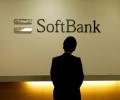
After a recent fall in profit, Masayoshi Son of SoftBank announced that the Japanese tech investor will look at dramatic cost-cutting. Before he does that, investments in India for calendar year 2022 (CY22) will fall radically, observed sources in the know. Last year, the company had invested around $3.2-3.5 billion in the Indian start-up ecosystem - almost 10 per cent of the total investment the sector received. For CY22, the investments may not even touch $1 billion.

Initial share sales are set to dazzle the Dalal Street in 2022 too as companies are expected to garner up to Rs 1.5 lakh crore in the New Year, continuing with the bullish momentum after 2021 turned out to be the best IPO year in two decades for the Indian market. Excessive liquidity and increased retail investor participation ensured a persistent euphoria in the Initial Public Offer (IPO) space wherein companies mopped up more than Rs 1.2 lakh crore this year even as pandemic gloom shadowed the broader economy. In 2022, the higher amount of funds through the primary market will be largely driven by the mega IPO of state-owned Life Insurance Corp (LIC).

Falling valuations, slowing funding rounds and faltering investor sentiment seem to have prompted many start-ups to lay off employees in a bid to conserve cash. The latest to do so is SoftBank-backed Cars24, a leading e-commerce platform for pre-owned vehicles, which has laid off over 600 staff, according to sources in the know. The move, they said, is aimed at conserving cash amid cautious investor sentiment and a slowdown in funding.

'Sure, we are teenagers who are doing this part time, but we feel we are making some sort of an impact.'

Affordable pricing, a variety of themes, and the ease of transacting are among key reasons that have made smallcases a hit among young investors.
Fundraising activity in the upcoming financial year 2022-23 may even surpass FY22 when 52 Indian companies raised a record Rs 1.11 trillion via initial public offerings (IPOs). According to a note by PRIME Database, 54 companies (including LIC) plan to raise Rs 1.4 trillion and currently hold the Securities and Exchange Board of India's (Sebi's) approval. Another 43 companies, the note said, are looking to raise about Rs 81,000 crore but waiting for Sebi nod.

After a stellar November that saw companies mop up over Rs 36,000 crore from the primary market via initial public offers (IPOs) and offers for sale (OFS), the current month, analysts said, will test investor's willingness to stay on with their investments as the one-month mandatory lock-in period for anchor investors begins to loosen. A note by Edelweiss Alternative Research suggests that in calendar year 2021 (CY21), 51 companies went public. Of these, 41 issuances' anchor selling dates are already over.

Nivedita Mookerji finds out how Paytm CEO Vijay Shekhar Sharma is handling his soaring popularity after the note ban as well as the criticism that comes as a package deal.
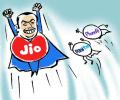
From PhonePe to Jio, everyone wants to be a Super App but it is still unclear if they will actually work in India.

'It is unclear whether clothing or home items qualify as essential items. A lot of professionals are working from home, and they need electronics for their productivity. Does this qualify as essential?'

With the stock market turning choppy, fintech start-up MobiKwik, which had filed a draft red herring prospectus (DRHP) to raise around $250 million through an initial public offering (IPO), is now looking to raise money from the private market. "We will raise private money but we are not in dire need. "The business was profitable for the first time in the December quarter on a top line of around Rs 150 crore and that will be maintained in the March quarter also. We are generating cash," said Upasana Taku, co-founder of MobiKwik.
 © 2026 Rediff.com - Advertise with us - Disclaimer - Privacy Policy - Sitemap - Feedback - About us - Terms of use - Grievances